
- News
- City News
- bareilly News
- When life's mission is to fix roads, one pothole at a time
Trending
This story is from October 1, 2018
When life's mission is to fix roads, one pothole at a time
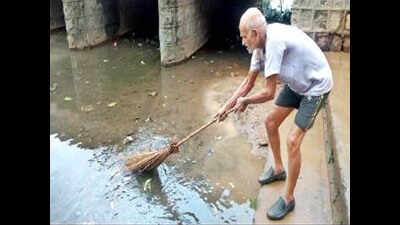
A retired school teacher, Rupnarayan Niranjan is a recepient of the President’s Award for Teachers. Every morning, he can be seen cleaning the surroundings or repairing roads in UP’s Lalitpur

On July 28, 2015, Dadarao lost his 16-year-old son Prakash in a road accident caused by a pothole. Within a fortnight, Dadarao got to read about two similar fatalities caused by potholes. "Prakash died because of a hole which had not been repaired for months," he said. Dadarao then embarked on a one-man mission to fill as many potholes in the city as he could find. He began with a crater near his vegetable and fruit store. "I felt I had paid tribute to Prakash by potentially saving someone's life," he recalls.
Working in the afternoons and weekends, Dadarao at first only reinstalled loose paver blocks. From 2017, he has been getting debris from construction sites to fill the holes.
When life's mission is to fix roads, one pothole at a time
Meanwhile, in Lalitpur city of Bundelkhand
region in UP, Rupnarayan Niranjan is a familiar sight on mornings - clad in a vest and shorts, cleaning roads, mending potholes and removing litter including plastic. He has been at it since 2000, when he retired as a school teacher. In 1999, he had been given the National Award to Teachers by the President.
As a teacher, he found out his students were staying away because the road to the school was in disrepair. Ignored by the authorities, he repaired the road himself and set up toilets and drinking water facilities at the school from his own salary.
After retirement, Niranjan has been setting out each morning with his handcart, broom and shovel looking for spots that need cleaning and potholes that need to be filled up. But he does not consider this voluntary service he is offering to the community.
"I receive a monthly pension from the government, which works out to Rs 600-700 a day. I consider it my duty to offer some services to the tax payers in return. Also, the work keeps me fit and gives me satisfaction," says the septuagenarian. One of his activities is to develop barren land into lush gardens, and he also spends time teaching school students. Lately, he has taken the responsibility of cleaning a canal near his home. He wades into the water every day and removes the garbage dumped by people.
For Niranjan, driven by a sense of duty from another generation, and Dadarao, spurred by personal tragedy, the work is literally endless. Often, the stretches they repair need to be fixed all over again, time after time. But both these remarkable men vow to keep at it for as long as they can, and so do those who have been inspired by them.
End of Article
FOLLOW US ON SOCIAL MEDIA











Hot Picks
TOP TRENDING
Popular Categories
Hot on the Web
Top Trends
T20 Highest RecordMike JeffriesVande Bharat SleeperTaylor SwiftTech LayoffMaharashtra ElectionBengaluru Building CollapseIsrael Hezbollah War NewsBrics Summit 2024CBSE Date Sheet 2025Brett LeeLawrence BishnoiStudy AbroadDelhi AQI TodayMaharashtra Election ScheduleJharkhand Election ScheduleLive Cricket Score
Trending Topics
Diwali WishesDhanteras 2024Vettaiyan CollectionDiwali 2024 DateAhoi Ashtami 2024Bhagavad Gita QuotesAnaar BenefitsVicky Vidya Ka Woh Wala Video CollectionBreast CancerKaun Banega Crorepati 16Belly FatPapayaSalman KhanPataudi PalaceActor Bala Wedding NewsGheeDiwali Bank HolidaysDhanvantariFc Barcelona Vs Bayern MunichWordle Answer
Living and entertainment
Latest News
Watch: Japanese man’s mimicry video of Shah Rukh Khan’s “I love you Meenamma” dialogue from Chennai Express goes viralIndian Railways washes blankets monthly: Health risks for train travelersSikh woman found dead in Walmart bakery oven in Canada'Toothless' environment laws: Supreme Court slams Centre over stubble burningBhavana Pandey calls herself an 'outsider'; Karan Johar reactsAshwagandha for hair loss: How to use itApplying castor oil on navel at night: Why it is highly recommendedSouthern Railway to run Diwali special train between Chennai and TirunelveliSSC CAPF 2024 Final answer key, marks announced for Paper I at ssc.gov.in: Here's the direct link to checkSalman Khans's sister Arpita Sharma and Aayush Sharma sell their Bandra house for Rs 22 crores: Report'Hitler-admirer', 'dictionary-definition fascist': Why John Kelly turned on Trump'Trump will win if early voting trends hold, and that's a big if...'Liam Payne's erratic behavior started ramping up' after split with girlfriend, substance abuse reports emergeBackstage reaction to Carlito's controversial WWE Raw Promo: sources reveal locker room responseWhen Sanjay Dutt said "I only care for Richa"Monsters star Cooper Koch eyes Patrick Bateman role in new American Psycho adaptationNew daddy Sarfaraz Khan joins Team India ahead of 2nd Test vs New Zealand in PuneWhen Katrina Kaif revealed that Vicky Kaushal's parents call her with THIS nickname at home and it's too adorable!
Copyright © 2024 Bennett, Coleman & Co. Ltd. All rights reserved. For reprint rights: Times Syndication Service